Glass facades Glass facades
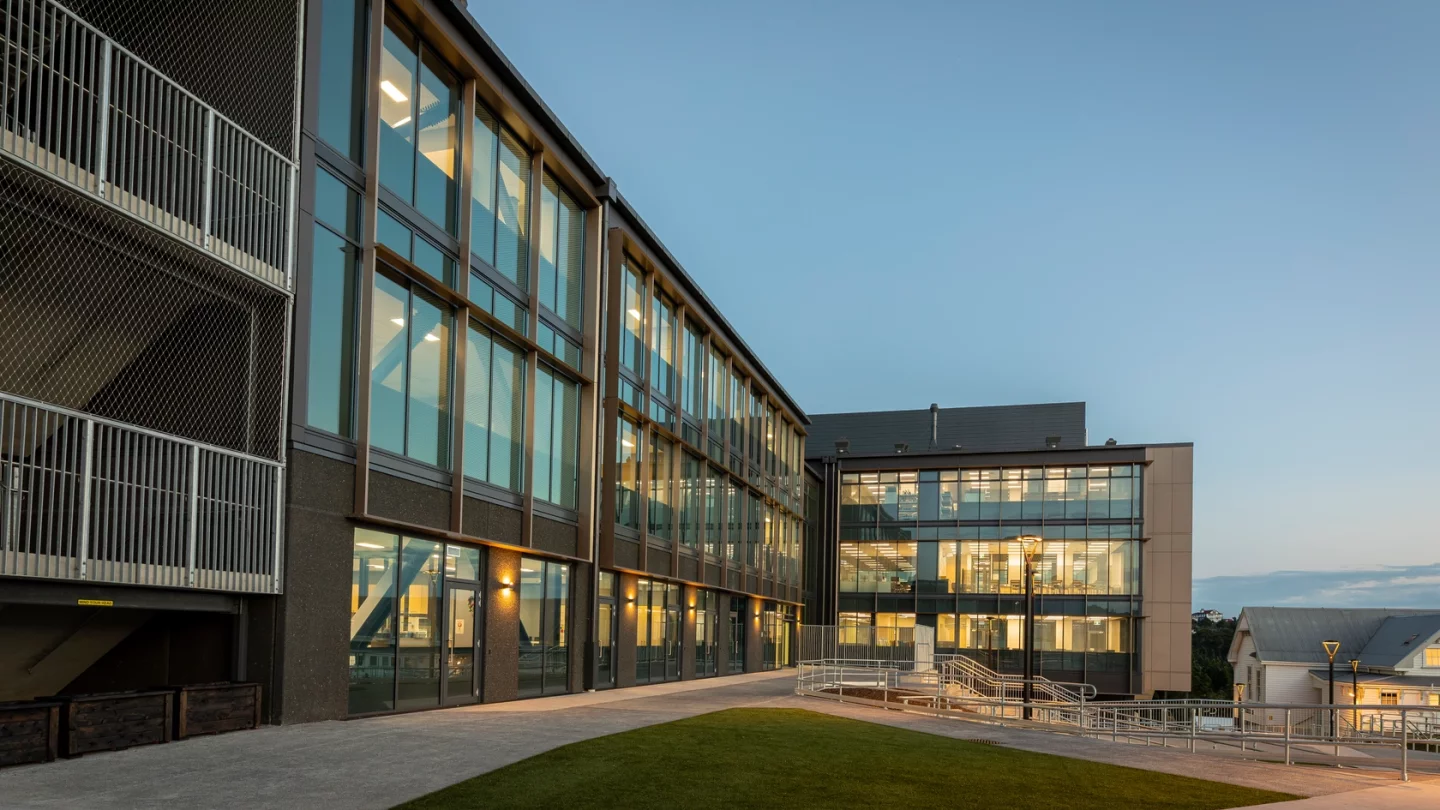
Glass facade and curtain wall systems for New Zealand buildings
Glass Projects designs, supplies, and installs glazed facade systems for commercial and high-end residential buildings across New Zealand. We work alongside architects and engineers from early design through to completion — helping to resolve the details that make a facade perform as well as it looks.
Our facade work covers curtain wall systems (both unitised and stick-built), structural glazing, point-fixed glazing, and frameless glass wall systems. Each project is engineered to meet NZ Building Code requirements for structural loads, seismic movement, weathertightness, and thermal performance — because a glass facade in Wellington faces very different demands to one in Auckland or Queenstown.
We bring practical knowledge to the design table. Our team understands how glass types, framing systems, and sealant details interact — and where things can go wrong if the specification is not right for the conditions. That experience is what sets the finished result apart.
Facade system types
The right facade system depends on building height, span, structural movement, aesthetic goals, and budget. We specify and install across the full range of glazed facade technologies.
Curtain wall (stick system): Aluminium mullions and transoms assembled on site, with glass and spandrel panels installed into the grid. Versatile and cost-effective for low to mid-rise buildings.
Unitised curtain wall: Factory-assembled panels craned into position and interlocked on site. Faster installation, tighter tolerances, and better suited to high-rise or complex geometries.
Structural glazing: Glass bonded to the framing with structural silicone, creating a flush exterior surface with no visible caps or pressure plates. Clean lines and excellent weathertightness.
Point-fixed glazing: Glass panels secured with stainless steel point fixings and spider brackets, often supported by tension rod or cable systems. Maximum transparency for feature walls and atriums.
Frameless glass walls: Large toughened or laminated panels with minimal framing, used for showroom facades, entrances, and feature elevations where visual openness is the priority.
Glass specification for facades
Double-glazed and triple-glazed insulated glass units are standard in facade systems. The sealed air gap (or gas-filled cavity) provides thermal insulation, reduces condensation risk, and improves acoustic performance. For NZ commercial buildings, IGUs are typically required to meet H1 energy efficiency targets. Argon-filled units with warm-edge spacers deliver the best thermal performance for the cost.
Low-E (low emissivity) coatings reflect long-wave heat radiation while allowing visible light through. In facade IGUs, Low-E glass is the primary tool for controlling solar heat gain and reducing energy costs. Coating position matters — surface 2 for solar control in warm climates, surface 3 for heat retention in cooler regions. Most NZ facade projects use a combination approach suited to the building orientation.
Toughened glass and laminated glass are both used extensively in facade glazing. Toughened glass provides impact resistance and strength for wind loading. Laminated glass holds together when broken, which is critical for overhead and high-level applications where fall-out could be dangerous. Many facade specifications call for toughened laminated glass — combining both properties in one panel.
Ceramic frit is a ceramic ink pattern fused onto the glass surface during toughening. It is used on facade spandrel panels to conceal floor slabs and services, as solar shading to reduce glare and heat gain, and as a design element in its own right. Patterns range from simple dot matrices through to full custom graphics. Frit density and coverage directly affect light transmission and solar performance.
Electrochromic glass tints dynamically in response to an electrical signal, allowing real-time control of solar heat gain and glare without blinds or external shading. It is increasingly specified for high-performance facades where architects want to eliminate fixed shading devices or maintain unobstructed views. The technology integrates with building management systems for automated or zone-based control.
Standard float glass has a green tint caused by iron content. Low-iron glass removes most of this, producing a clear, colour-neutral appearance. It matters most on facades with large glass areas, thick laminated make-ups, or where true colour rendering is important — showrooms, galleries, and buildings where the architect wants maximum transparency without the green cast at the edges.
Featured Project:
Delegat Winery
Description: The largest glass wall in New Zealand
Thermal and structural performance
Facade glazing in New Zealand must satisfy multiple performance requirements simultaneously. Getting the balance right between thermal control, structural capacity, and daylighting takes careful specification — and it starts early in design.

NZ Building Code Clause H1 sets minimum thermal performance standards for building envelopes. For commercial buildings, facade glazing has a major impact on the overall energy model. Glass selection — particularly IGU configuration, Low-E coatings, and solar heat gain coefficient (SHGC) — directly affects heating, cooling, and lighting energy use. We work with energy modellers to optimise the glazing specification for each orientation and climate zone.
Facade systems must resist wind loads (to NZS 3604 or specific wind engineering assessments) and accommodate seismic inter-storey drift without glass breakage or panel dislodgement. In a high-seismic country like New Zealand, this is not optional — it is fundamental to facade design. Curtain wall systems use movement joints, slotted connections, and flexible sealants to absorb building movement while maintaining weathertightness.
NZ weather is hard on facades — driving rain, UV exposure, salt spray on coastal sites, and wide temperature swings. Facade systems need robust drainage, pressure equalisation, and durable seals. We specify and test to E2/AS1 requirements, and our installation teams understand the critical details that keep water out long-term.
Featured Project:
Catalina Bay
Description: Glass facade
Talk to us about your facade project
We work with architects and construction teams from early design through to handover. If you have a glazed facade on the boards, we can help with specification, engineering, and installation.
Get in touch