Glass canopies and roofs Glass canopies and roofs
Glass canopy and glazed roof systems for New Zealand projects
Glass Projects designs, supplies, and installs glazed canopy and roof systems for commercial buildings, public spaces, and high-end residential projects across New Zealand. Our overhead glazing work covers entrance canopies, walkway shelters, atrium roofs, skylights, and fully glazed roof structures — each engineered for the structural, safety, and weathertightness demands of overhead applications.
Overhead glazing carries specific requirements that differ from vertical glazing. The glass must be retained in the event of breakage, drainage and waterproofing details are critical, and the structure needs to handle wind uplift, snow loads, and dead loads. We bring practical experience to these details — working with architects and engineers from early design to ensure the specification and support structure are right for the conditions.
Canopy and roof system types
The right system depends on the span, exposure, structural support available, and the architectural intent. We design and install across a range of overhead glazing configurations.
Entrance canopies: glazed shelters over building entrances, providing weather protection while maintaining visual openness. Typically supported on steel or aluminium frames cantilevered from the building facade or on independent columns.
Walkway and link canopies: covered connections between buildings, transit stations, and outdoor concourses. These often span long distances and need to accommodate thermal movement and drainage across the full length.
Atrium roofs and skylights: glazed roof structures that bring natural light into building interiors. Atrium glazing often involves large spans, thermal performance requirements, and integration with smoke ventilation systems.
Point-fixed overhead glazing: glass panels secured with stainless steel point fixings and spider brackets, often supported on tension rod or cable systems. Provides maximum transparency for feature canopies and architectural roof structures.
Framed roof glazing: aluminium or steel-framed systems with glazing bars, designed for larger roof areas where structural performance, drainage, and thermal insulation are primary concerns. Can incorporate opening panels for ventilation.
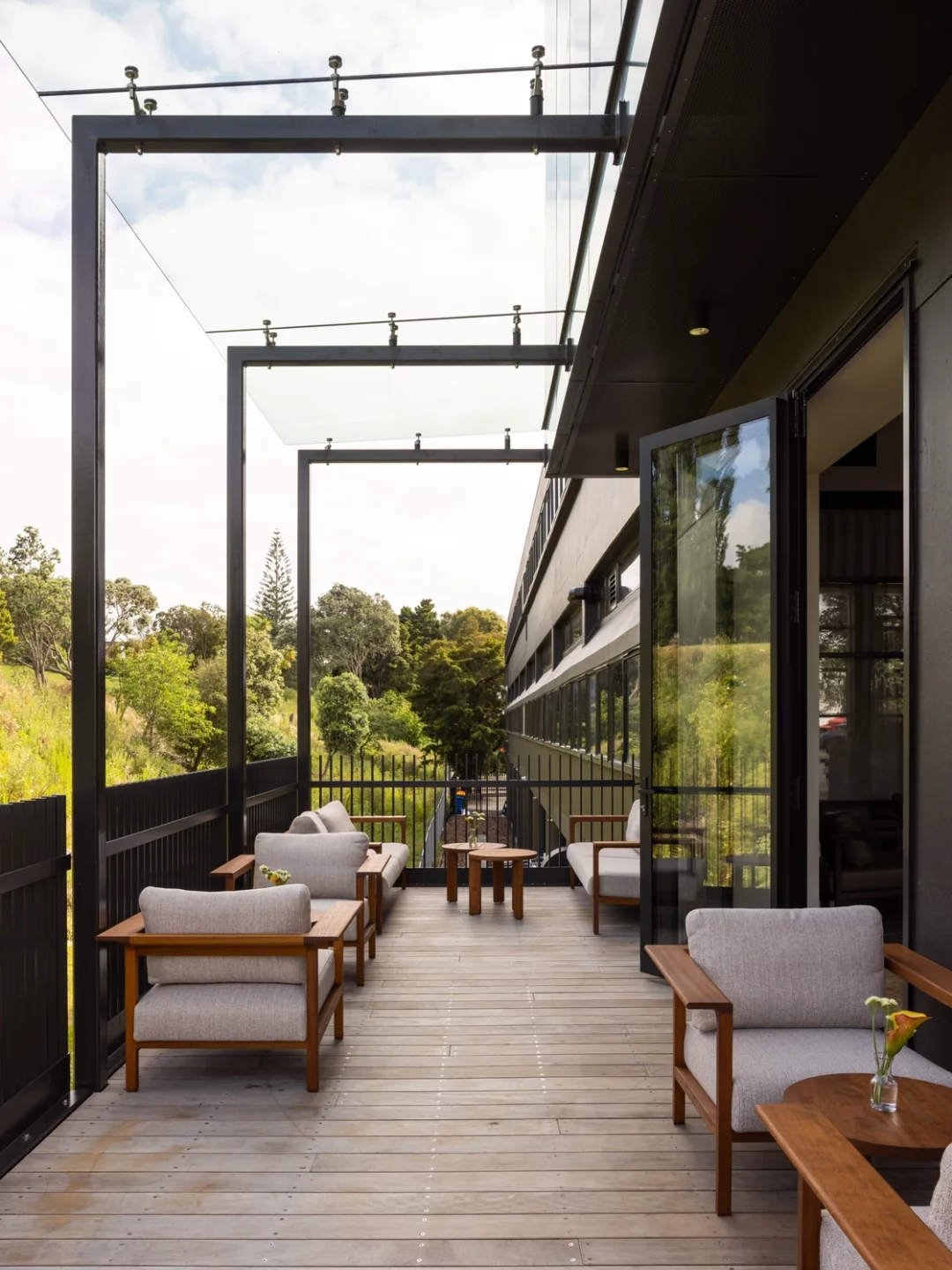
Featured Project:
Huka Lodge
Description: Glass canopy/roof system designed, supplied and installed for the Huka Lodge in Taupo
Glass specification for overhead glazing
Laminated glass is mandatory for overhead glazing applications in New Zealand. Under NZS 4223.1, any glass installed at an angle of more than 15 degrees from vertical must provide post-breakage retention — meaning the panel stays in place if it breaks, rather than falling as fragments. Laminated glass achieves this through a PVB or ionoplast interlayer that holds the broken pieces together. For canopies and roof glazing, laminated toughened glass is the standard specification — combining impact resistance with post-breakage retention.
For glazed roofs and atrium skylights where thermal performance matters, insulated glass units reduce heat loss in winter and limit solar heat gain in summer. Double-glazed and triple-glazed IGU configurations with laminated inner panes are common in overhead applications. The sealed cavity also reduces condensation risk on the underside of the glass — an important consideration for occupied spaces below.
Low-E coatings are particularly effective on overhead glazing, where solar exposure is at its most direct. A roof panel receives significantly more solar radiation than a vertical facade panel, making solar control critical for occupant comfort and energy performance. Low-E glass reflects heat while maintaining light transmission — keeping spaces bright without excessive heat build-up. Tinted and high-performance solar control coatings are also available for projects where glare reduction is a priority.
Standard glass develops an increasingly noticeable green tint as thickness increases — and overhead laminated panels are often thicker than vertical glazing. Low-iron glass eliminates this tint, producing a clear, colour-neutral appearance. It is specified where the architect wants maximum transparency and true colour rendering — particularly for feature canopies and atrium skylights where the glass is a prominent design element.
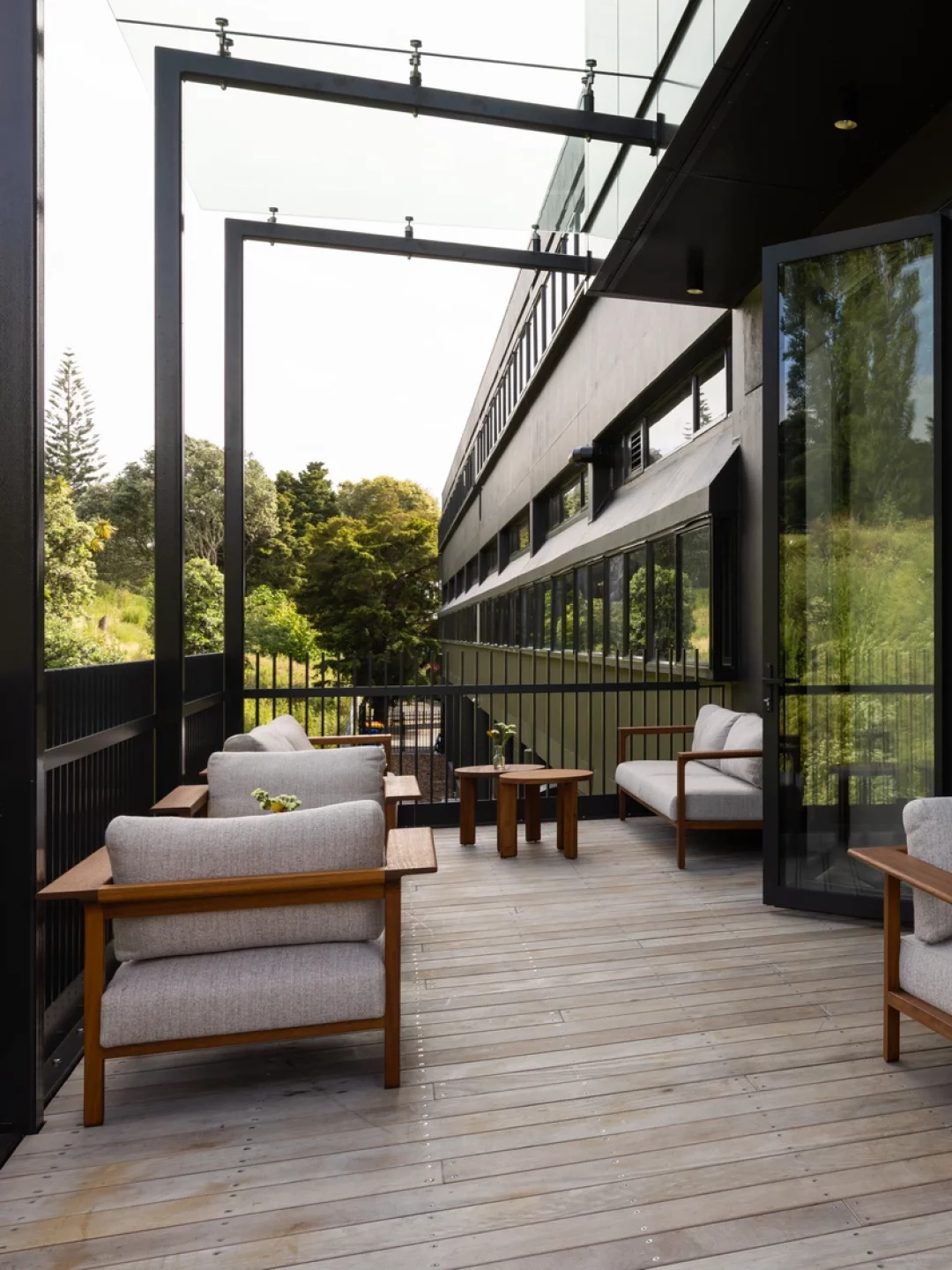
Featured Project:
80 Queen Street
Description: Overhead glass canopy shelter
Where glazed canopies and roofs are used
Overhead glazing turns up across a wide range of commercial and public projects. The applications we handle most often include:
Commercial building entrances: glass canopies that shelter entry points while maintaining the transparency and visual openness of the facade. Often integrated with the building's curtain wall or facade system.
Transport hubs and stations: platform canopies, bus shelters, and covered concourses where large-span glazing provides weather protection and natural light for public areas.
Atriums and light wells: glazed roof structures that bring daylight deep into building interiors. Common in office buildings, hotels, and mixed-use developments where natural light reduces energy use and improves occupant comfort.
Retail and hospitality: covered outdoor dining areas, mall concourses, and hotel porte-cochères where glass roofing extends usable space while maintaining an open-air feel.
Residential feature glazing: skylights, glazed pergolas, and covered courtyards for high-end residential projects where architectural glazing is a design feature.
Talk to us about your canopy or roof glazing project
We work with architects and construction teams from early design through to installation. If you have overhead glazing on the boards, we can help with glass specification, structural support, and weathertightness details.
Get in touch