Glass Balustrades Glass Balustrades
Architectural glass balustrade systems for New Zealand projects
Glass Projects designs, supplies, and installs glass balustrade systems for commercial and residential construction across New Zealand. Our work spans multi-storey apartment buildings, office atriums, retail mezzanines, and high-end residential decks and stairways. Every installation is engineered to meet NZ Building Code requirements, including NZS 4223.3 (glazed barriers), clause B1 (structure), and clause F4 (safety from falling).
We work directly with architects, specifiers, and construction companies from early design through to installation. That means getting the glass type, fixing system, and structural details right before anything arrives on site — reducing delays and ensuring the finished result matches the design intent.
Channel fixing systems
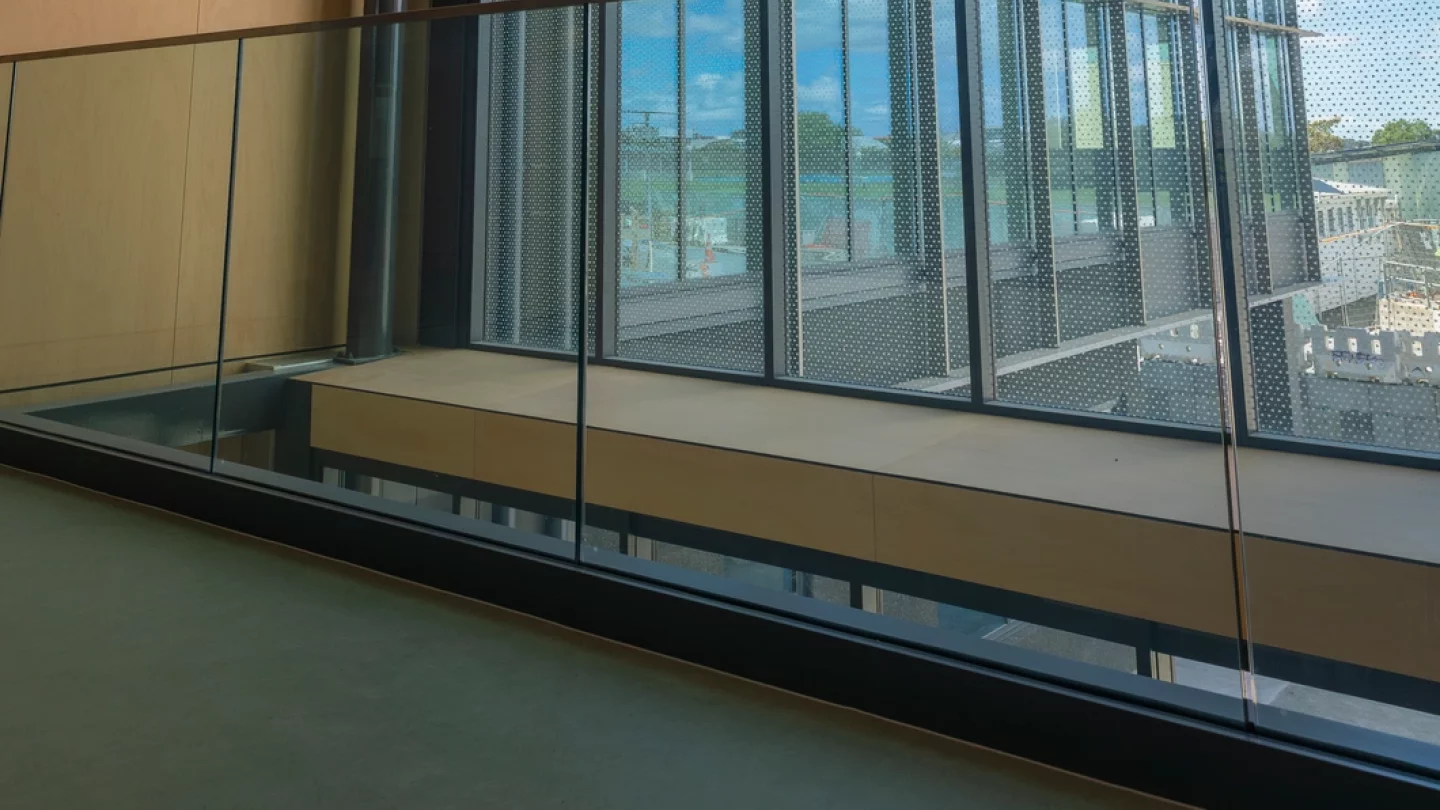
Glass Projects installs a range of aluminium channel systems for frameless glass balustrades. These systems use concealed fixings for a clean, minimalist finish and are designed for the structural demands of barrier applications in New Zealand.
SmartLock Channel System — a single-sided adjustment system that allows glass alignment from the face side only. Well suited to applications where access is limited to one side, such as edge-of-slab balconies and elevated walkways. The concealed wedge mechanism locks glass securely without visible hardware.
Tilt-Lock Channel System — uses a rotating pressure plate mechanism to clamp the glass within the channel. Suited to residential and light commercial applications where clean lines and installation flexibility are priorities. No holes required in the glass.
Both systems accept a range of glass thicknesses and are compatible with top-mounted handrails where required by the building design or code.
Glass types for balustrades
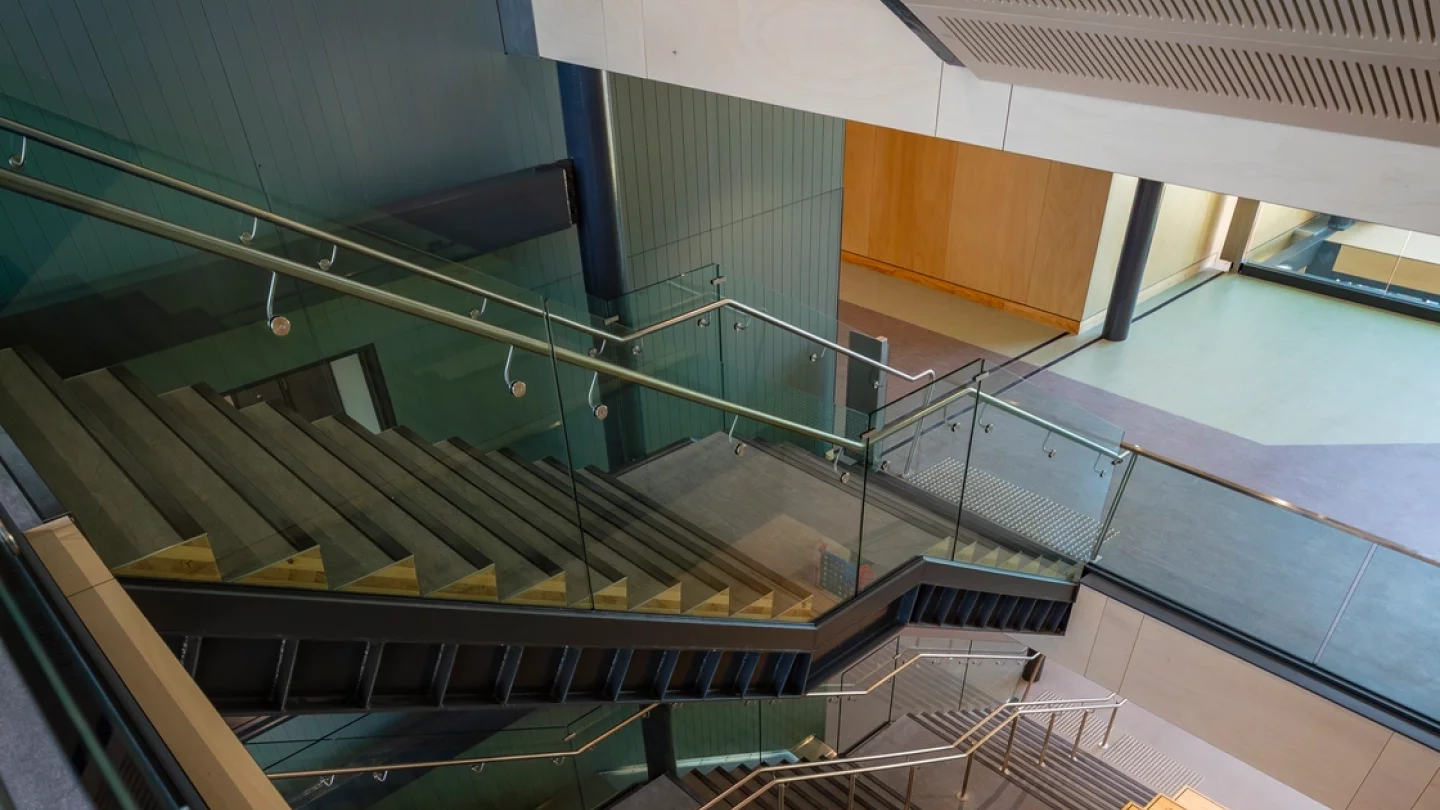
The right glass specification depends on the application, height, exposure, and whether the balustrade is standalone or has a continuous handrail. Here is how the main options compare for barrier applications:
Toughened glass — Grade A safety glass with high impact resistance. Commonly used for balustrades with a continuous handrail, where the glass functions as an infill panel rather than the primary structural barrier. Shatters into small, relatively safe fragments on breakage.
Laminated toughened glass — two layers of toughened glass bonded with a PVB or ionoplast interlayer. Provides post-breakage retention, meaning the panel stays in place if one lite breaks. Required for most frameless balustrade applications under NZS 4223.3, particularly where there is no continuous handrail or where the fall height exceeds certain thresholds.
Stiff/rigid interlayer glass — laminated toughened glass with a structural ionoplast interlayer (such as SentryGlas) that maintains rigidity after breakage. Specified for cantilevered and frameless balustrades where the glass itself is the primary structural element. Offers superior post-breakage performance compared to standard PVB-laminated panels.
For projects where glass clarity is critical — such as waterfront apartments or feature stairways — low iron glass eliminates the green tint of standard float glass. Curved glass is also available for balustrades that follow curved building forms or feature staircases.
Featured Project:
Northcote College
Description: Glass balustrades and external window glazing for the Naylor Love–led rebuild of Northcote College on Auckland's North Shore.
Featured Project:
TradeMe
Description: Glass balustrades and office partitioning
Where glass balustrades are used
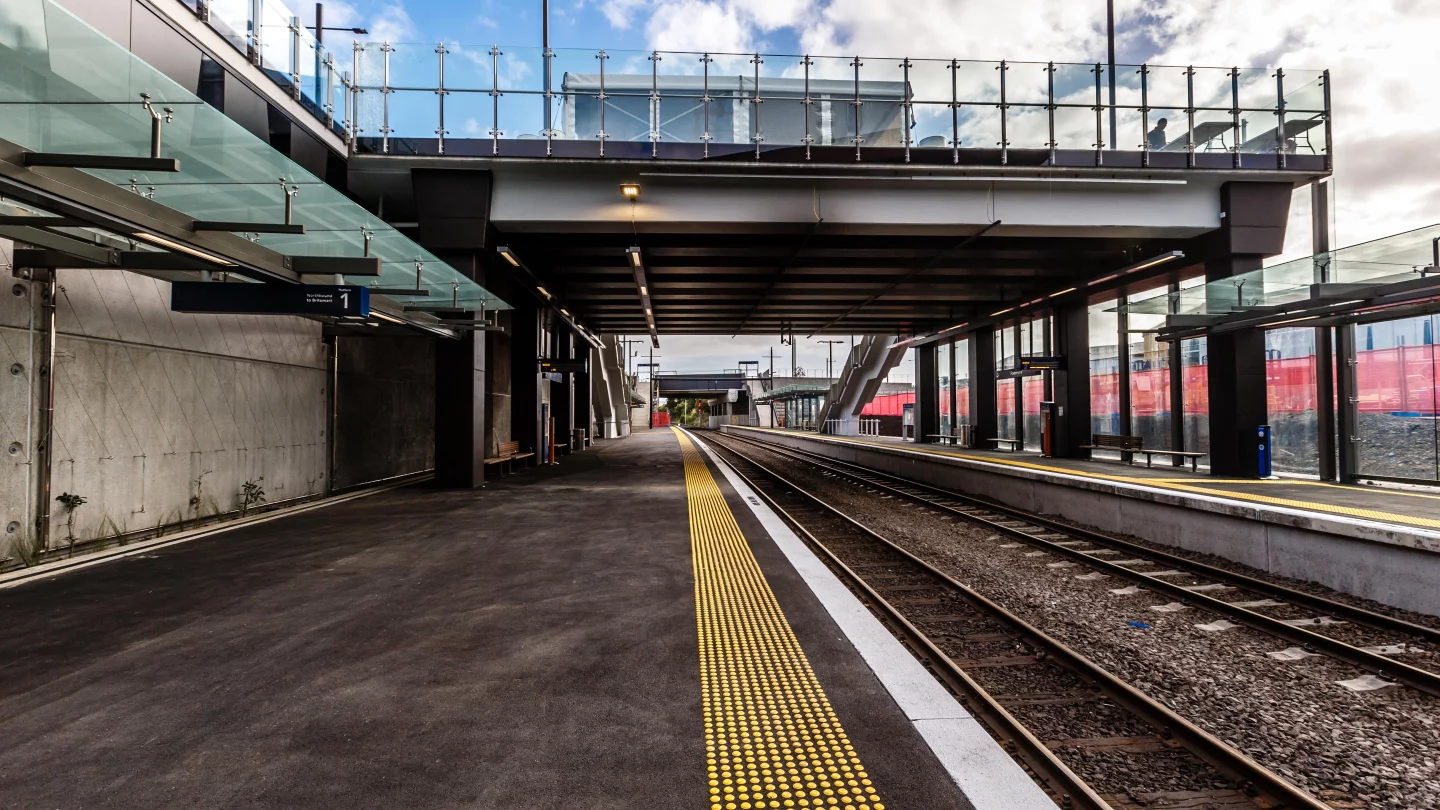
Glass balustrade systems turn up across a wide range of project types. The applications we handle most often include:
Commercial atriums and voids: multi-level office buildings, shopping centres, and public buildings where glass barriers maintain sightlines and natural light across open floor plates.
Apartment balconies and terraces: frameless glass maximises views from elevated living spaces. Coastal projects benefit from corrosion-resistant channel hardware and low iron glass for clarity.
Internal staircases and mezzanines: glass balustrades open up internal spaces, letting light flow between levels. Common in commercial fitouts, apartments, and residential renovations.
External walkways and elevated decks: exposed applications where wind load, weather resistance, and structural performance are critical considerations.
Retail and hospitality: mezzanine barriers, balcony edges, and feature stairways in hotels, restaurants, and retail environments.
For pool barrier applications, glass balustrade systems can serve dual purposes as pool fencing. See our glazed pool fences and gates page for specific pool barrier requirements under NZS 8500.
Featured Project:
Tamaki Drive Apartments
Description: Apartment glass balustrades and facade
Specify glass balustrades for your next project
Talk to our team about glass type, channel system selection, and installation details. We work with architects and builders from specification through to handover.
Get in touch